Ford Diesel Engines Guide:
Specs, Towing, and Capability
Heavy Work Starts With the Right Engine ✅
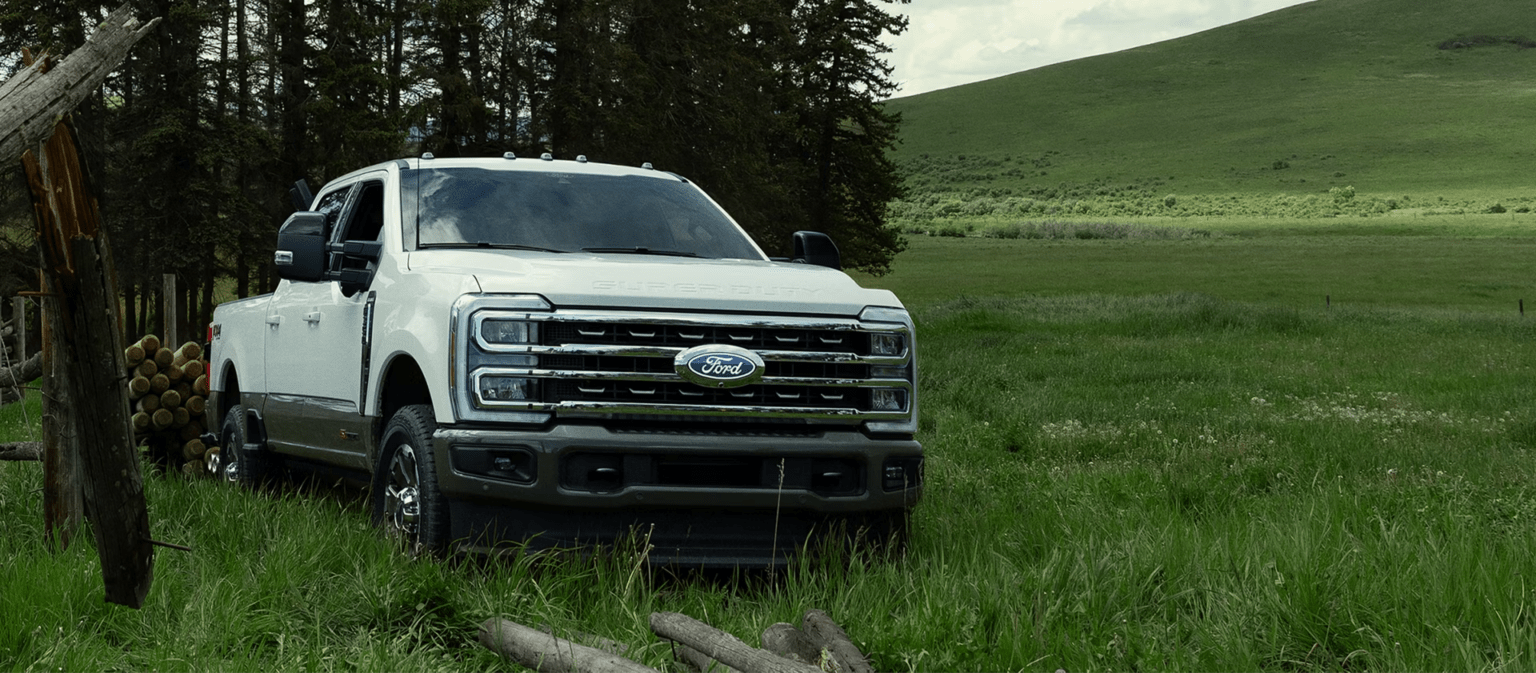
Today’s Ford diesel engines are built around one mission: serious Super Duty capability. For current shoppers, that means two versions of Ford’s 6.7L Power Stroke® V8 Turbo Diesel, one tuned for strong everyday heavy-duty work and one built for maximum output.
The standard 6.7L makes 475 horsepower and 1,050 lb-ft of torque. The High Output version raises that to 500 horsepower and 1,200 lb-ft. Both pair with a 10-speed TorqShift® automatic transmission.
At J.C. Lewis Motor Co., we help shoppers compare more than horsepower. Trailer weight, payload, axle setup, drivetrain, and how often you actually tow all matter when choosing a new Ford diesel engine.
Quick Answer: Which Ford Diesel Engine Is Best?
For most Super Duty shoppers, the standard 6.7L Power Stroke diesel already delivers serious capability with 475 horsepower and 1,050 lb-ft of torque. That’s enough muscle for frequent towing, heavy trailers, and demanding work without automatically stepping up to the most powerful option.
The High Output 6.7L is the better fit if you regularly work near the upper end of Super Duty capability. It produces 500 horsepower and 1,200 lb-ft and supports Ford’s highest available towing ratings when paired with the right truck configuration.
Neither is automatically better. Among current Ford diesel engines, the right choice comes down to how much you tow, how often you tow it, and whether you actually need the extra output of the High Output version.
Current Ford Diesel Engines at a Glance
Ford currently offers two diesel choices in the 2026 Super Duty lineup. Both are built around the same 6.7L V8 architecture, but they’re tuned for different levels of demand. The standard version already delivers serious heavy-duty output, while the High Output engine is aimed at shoppers who regularly work closer to the upper end of Super Duty capability.
Engine | Horsepower | Torque | Best Use |
|---|---|---|---|
6.7L Power Stroke V8 Turbo Diesel | 475 hp | 1,050 lb-ft | Frequent heavy towing and work |
6.7L High Output Power Stroke V8 Turbo Diesel | 500 hp | 1,200 lb-ft | Maximum towing and demanding commercial use |
The difference isn’t just the extra horsepower. The High Output version adds another 150 lb-ft of torque, which can matter when trailer weights climb, grades get steeper, or the truck spends more time working under load.
Both Ford diesel engines use a compacted graphite iron block, aluminum cylinder heads, four valves per cylinder, single-turbocharged induction, and a 10-speed TorqShift automatic. That shared foundation gives both versions the heavy-duty construction and low-rpm pulling strength buyers expect from a Super Duty diesel.
Standard or High Output? Same Size, Different Mission
The two current diesel options share the same 6.7L displacement, but they’re aimed at different workloads.
6.7L Power Stroke
The standard Power Stroke diesel produces 475 horsepower at 2,600 rpm and 1,050 lb-ft of torque at 1,600 rpm. That low-rpm torque gives it the pulling force heavy-duty shoppers expect without automatically stepping into the highest-output configuration.
Great for: frequent towing, work trailers, fifth wheels, equipment hauling, and buyers who want strong diesel capability without chasing the maximum number.
High Output 6.7L Power Stroke
The High Output Power Stroke diesel reaches 500 horsepower and 1,200 lb-ft of torque. It’s the diesel to look at when maximum gooseneck, fifth-wheel, or conventional towing capability matters most.
Great for: large trailers, demanding commercial work, heavy equipment, and shoppers who want the strongest current Ford diesel engines available.
Why Diesel Makes Sense for Heavy Towing
The biggest advantage of diesel isn’t simply horsepower. It’s torque delivered low in the rev range, where heavy-duty trucks do a lot of their hardest work.
Both current Ford diesel engines reach peak torque at 1,600 rpm, with 1,050 lb-ft from the standard engine and 1,200 lb-ft from the High Output version. Ford’s 7.3L gas V8, by comparison, makes 485 lb-ft at 4,000 rpm.
That difference becomes more noticeable when you’re getting a loaded trailer moving, climbing grades, merging under load, or spending long stretches towing at highway speeds. The Power Stroke diesel can deliver strong pulling force without needing to rev as high, which is a big part of why diesel feels so well suited to demanding towing and commercial work.
Diesel or Gas Super Duty?
Diesel makes the strongest case when towing weight, frequency, and low-rpm torque matter most. Gas still makes plenty of sense for lighter workloads.
Choose Diesel If...
You regularly pull heavy trailers, cover long distances under load, or want access to Super Duty’s highest available towing ratings.
Choose Gas If...
You tow less often, your loads stay lighter, or you want strong capability without paying for diesel performance you may rarely use.
How Much Can Ford Diesel Engines Tow?
The short answer: a lot, but the engine is only one part of the equation.
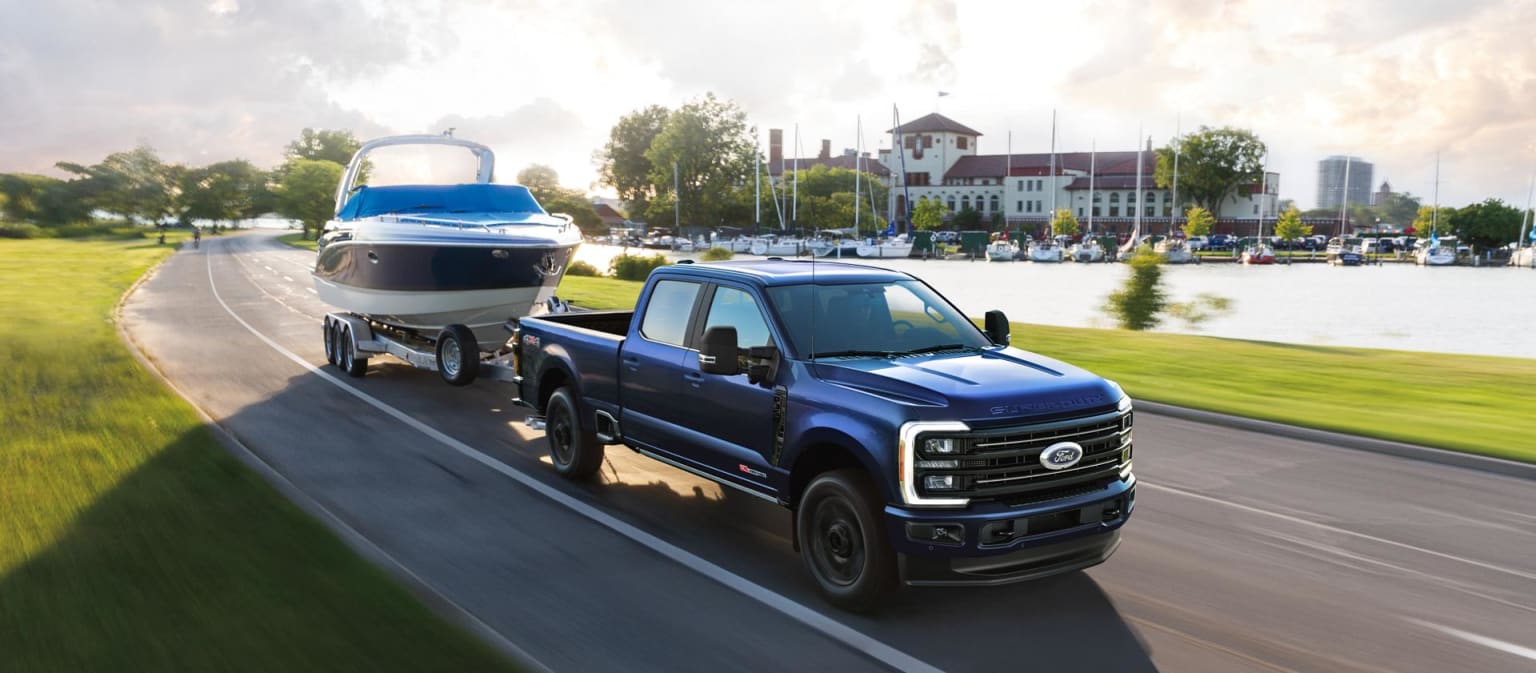
Ford lists maximum available 2026 Super Duty ratings of:
40,000 lbs gooseneck towing
35,000 lbs fifth-wheel towing
30,000 lbs conventional towing
The High Output 6.7L Power Stroke diesel is tied to the 40,000-pound gooseneck maximum with the proper truck and towing package. The standard 6.7L can reach up to 38,600 pounds in the right configuration.
That’s why comparing Ford diesel engines by torque alone doesn’t tell the whole story. F-250, F-350, and F-450 trucks can carry very different ratings depending on axle ratio, wheel setup, drivetrain, cab, bed, and towing equipment.
Which Super Duty Fits the Job?
The engine matters, but so does the truck around it.
F-250
A strong choice for buyers who need serious towing and diesel torque without automatically stepping into the heaviest-duty chassis.
F-350
Adds more available towing, payload, and dual-rear-wheel configurations for tougher workloads. Ford offers both standard and High Output diesel choices depending on trim and setup.
F-450
Built for the most demanding towing work, with dual rear wheels and configurations designed for extreme gooseneck and fifth-wheel capability.
What Makes a Modern Ford Diesel Different?
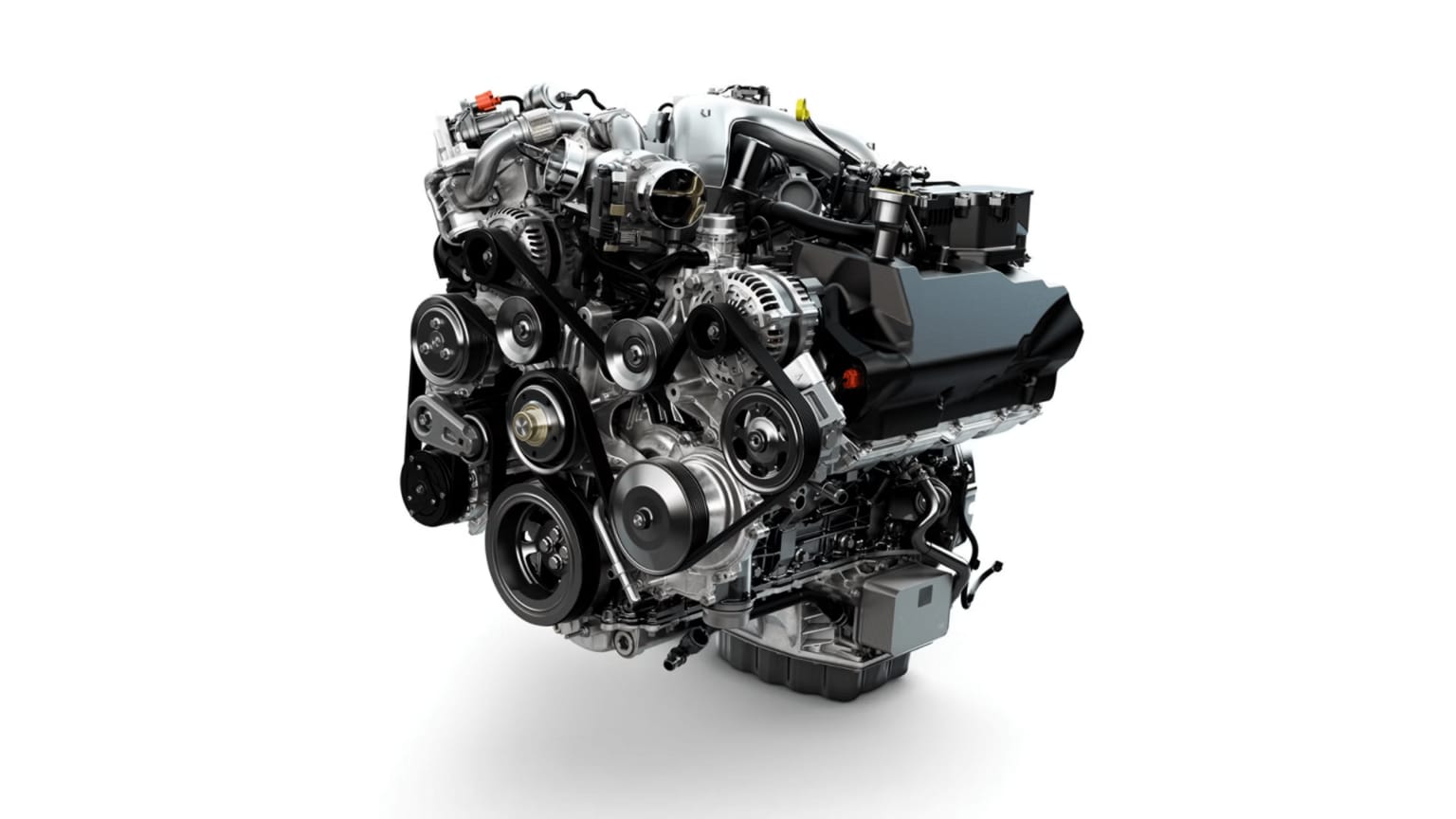
The current 6.7L architecture uses a compacted graphite iron block, aluminum cylinder heads, four valves per cylinder, and single-turbocharged induction with an air-charged cooler.
That engineering is designed around sustained heavy-duty work, not simply a big peak horsepower number. Modern Ford diesel engines deliver enormous torque low in the rev range, which is exactly where towing and hauling demand it.
A Quick Look Back at Ford Diesel Engines
Ford’s diesel truck history includes several well-known generations before the current 6.7L Power Stroke diesel.
The 7.3L Power Stroke became a familiar name in the 1990s and early 2000s, followed by the 6.0L and 6.4L generations. The current 6.7L marked a major shift because Ford designed and built the engine in-house.
That history matters because today’s Ford diesel engines are the result of decades of heavy-duty truck development, but current shoppers really have two choices to make: standard 6.7L or High Output 6.7L.
Is a New Ford Diesel Engine Worth It?
A new Ford diesel engine makes the strongest case when heavy work is part of your routine, not something that happens twice a year.
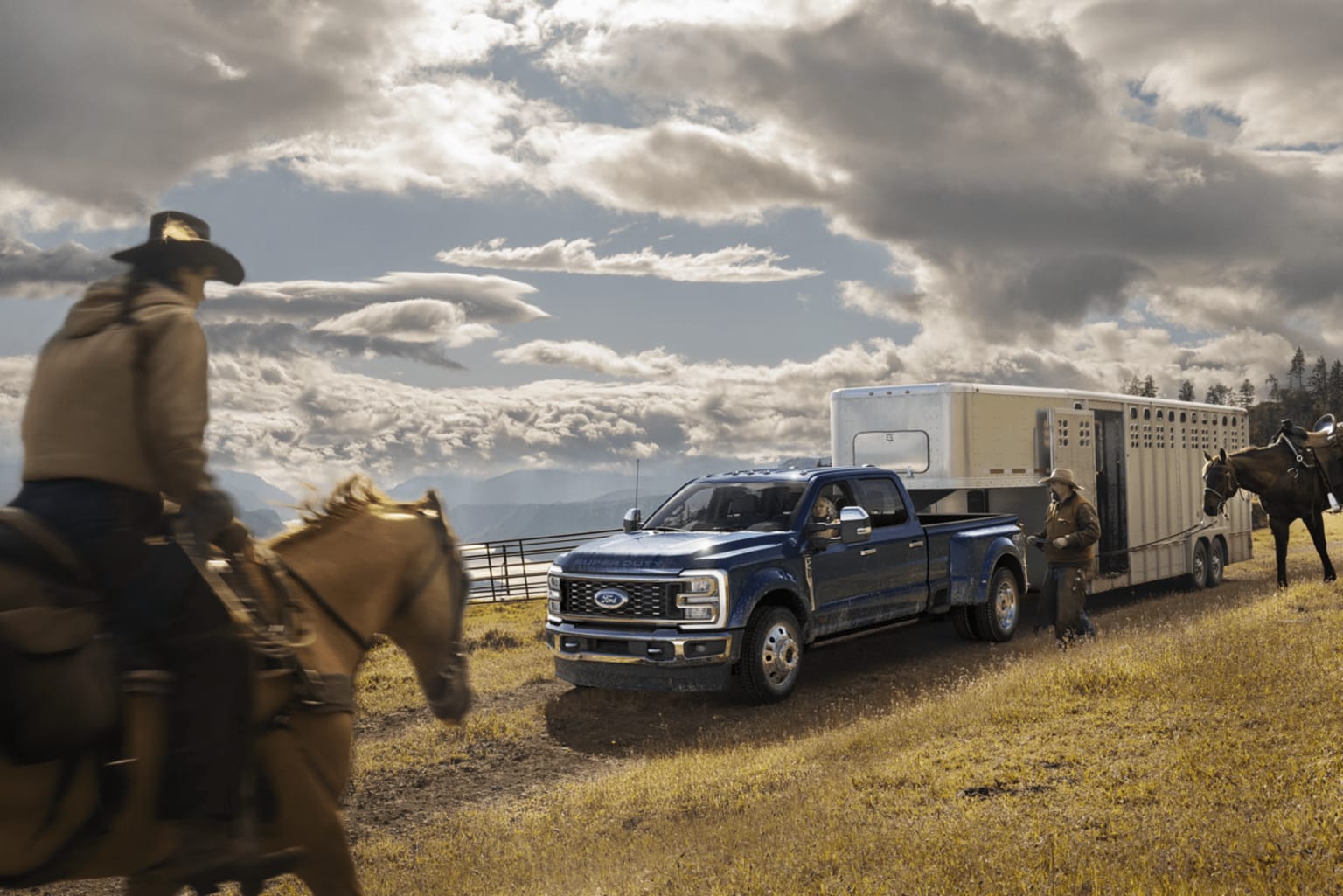
If you tow large fifth wheels, equipment trailers, livestock trailers, or commercial loads regularly, Power Stroke diesel torque can make the Super Duty feel much better suited to the job. If you mostly commute empty and tow occasionally, a gas Super Duty may be the more practical choice.
The goal isn’t to buy the most engine. It’s to buy the engine that matches the work.
Put the Power Stroke to the Test
Specs can narrow the field, but a test drive tells you how a Super Duty actually feels from behind the wheel.
At your nearest J.C. Lewis Motor Co. dealership, our team can help you compare Ford diesel engines in person, experience standard and High Output Power Stroke performance, and test drive the Super Duty configuration that best fits your towing, hauling, and everyday needs.
Shop the Super Duty
Ford Diesel Engines FAQs
Heavy-duty diesel shopping comes with a lot of numbers. These FAQs break down towing, reliability, ownership, and what matters most when comparing Ford diesel engines.